
Harvest is always our first choice, an animal that becomes food is better than one that doesn't. But not every block can be harvested. Some are a few hectares on the edge of town. Some sit next to a toxin operation. Some landholders just want to protect the plantings that are finally taking off before the rabbits get involved.
For those, there's pest removal.
How it works
- Tell us about the block. Use the property tool on the website, it tells us the size of your property, the problem you're dealing with and if you're using any toxins.
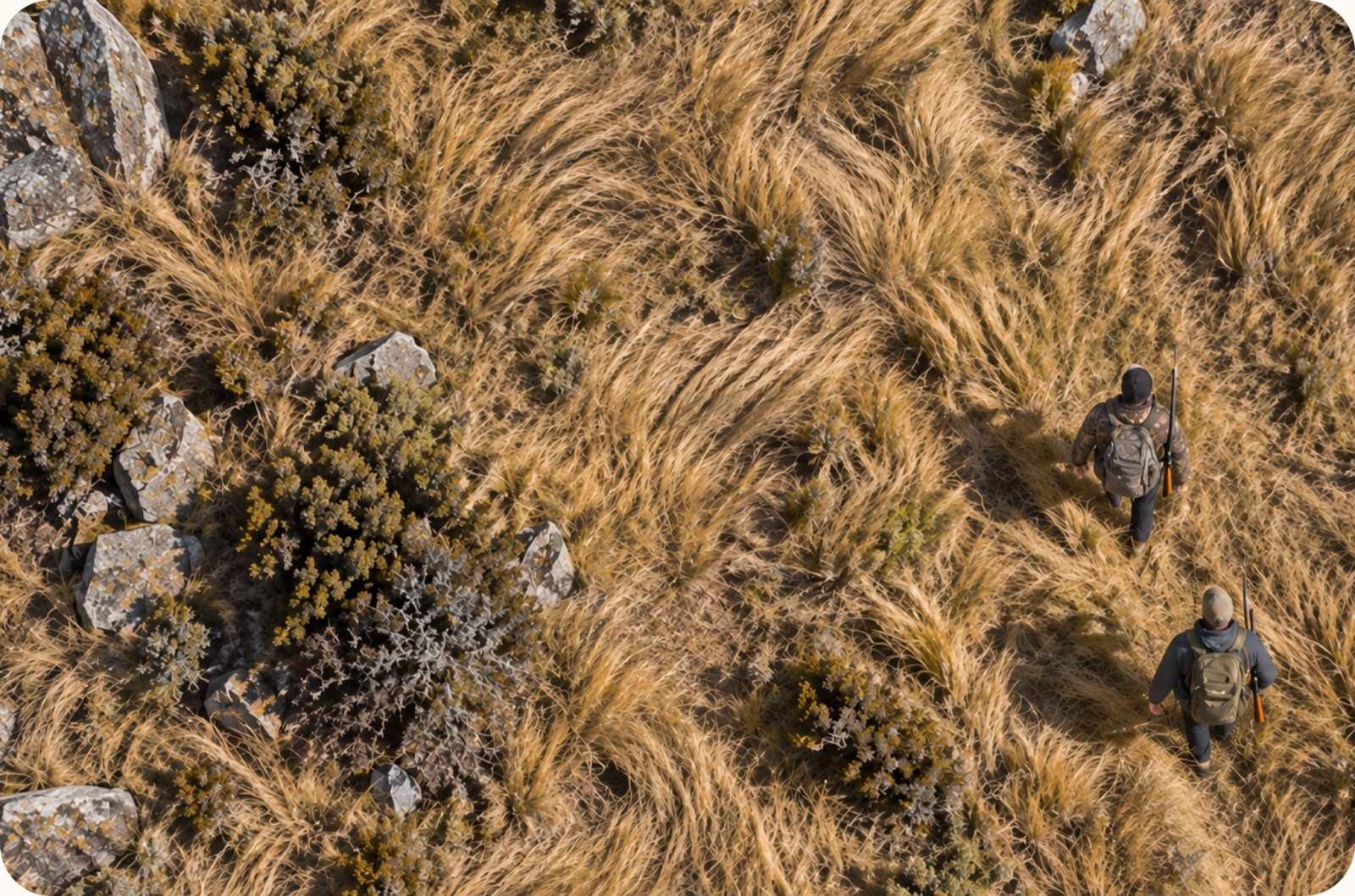
- We send a hunter. Someone competent, local where possible, who's done this before. Shooting only for now; trapping is coming.
- The work gets done. Day or night, whatever suits the animals. Night work is covered by the callout.
- Close-out. The hunter sends a photo to confirm the count. You pay for what was removed, nothing more.
What it costs
| Item | Price | | --- | --- | | Callout | $150 | | Rabbits, hares, possums | $6 per animal | | Other species | Email us |
If you'd like us back regularly, a rolling visit every two months comes with a lower callout. Rabbits don't take time off, so we can keep the pressure on.
What happens to the animals
Nothing goes to waste if we can help it. Carcasses from clean land can go to local trapping projects as stoat bait. Where toxins might be involved, the liver is removed first, or the carcass is buried or composted. The hunter makes the call on the day.
Keeping it simple
Pest removal is handled through the landholder console. You get a quote, a time, a photo and an invoice. If something isn't right, tell us and we'll sort it.
Next up: why we count birds as well as rabbits.